AGE-ML: Agentic Architecture for Data-Centric AutoML
The 30th European Conference on Advances in Databases and Information Systems
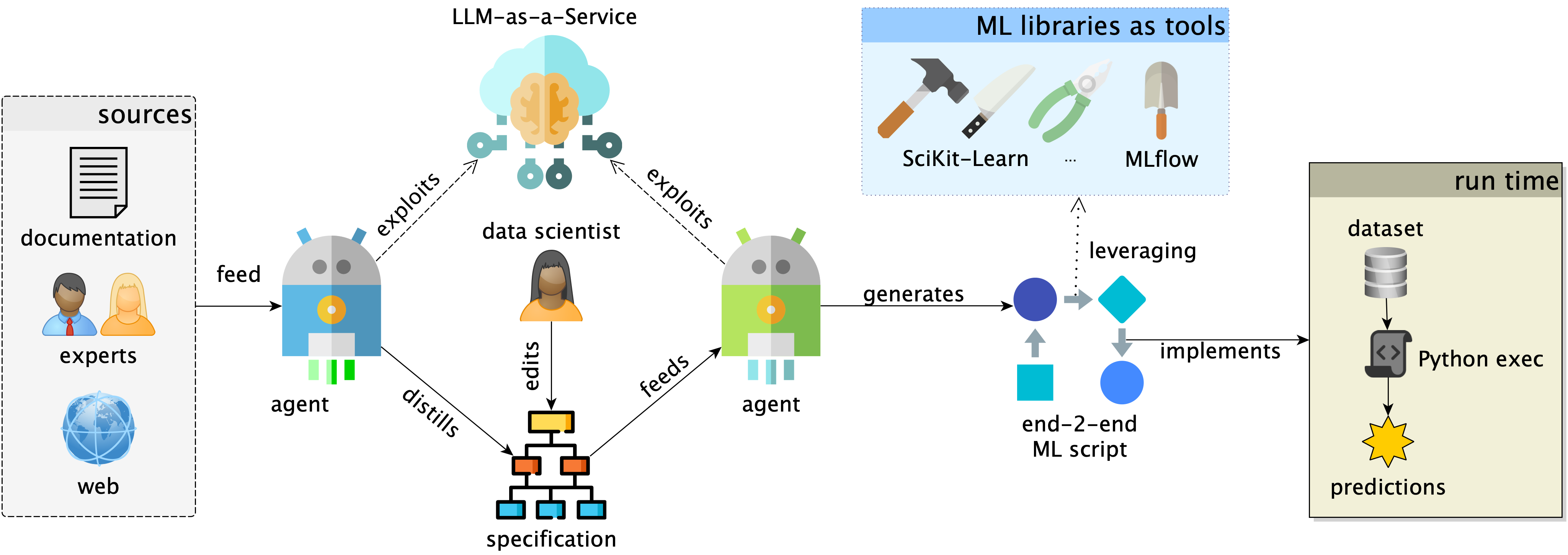
AGE-ML: Specifications Define the Search Space

“Knowing that gender and location are sensitive attributes, predict the dataset outcome and verify the results should not depend on them”
- A warm-start standard specification (written in YAML) is provided, including classic ML steps
- LLM-powered agents distill and inject additional assumptions and constraints.
- E.g., possible solutions are: feature depletion, data augmentation or pseudonymization, fairness-aware models, or post-hoc metrics.
AGE-ML: Specifications Keep Experts in the Loop
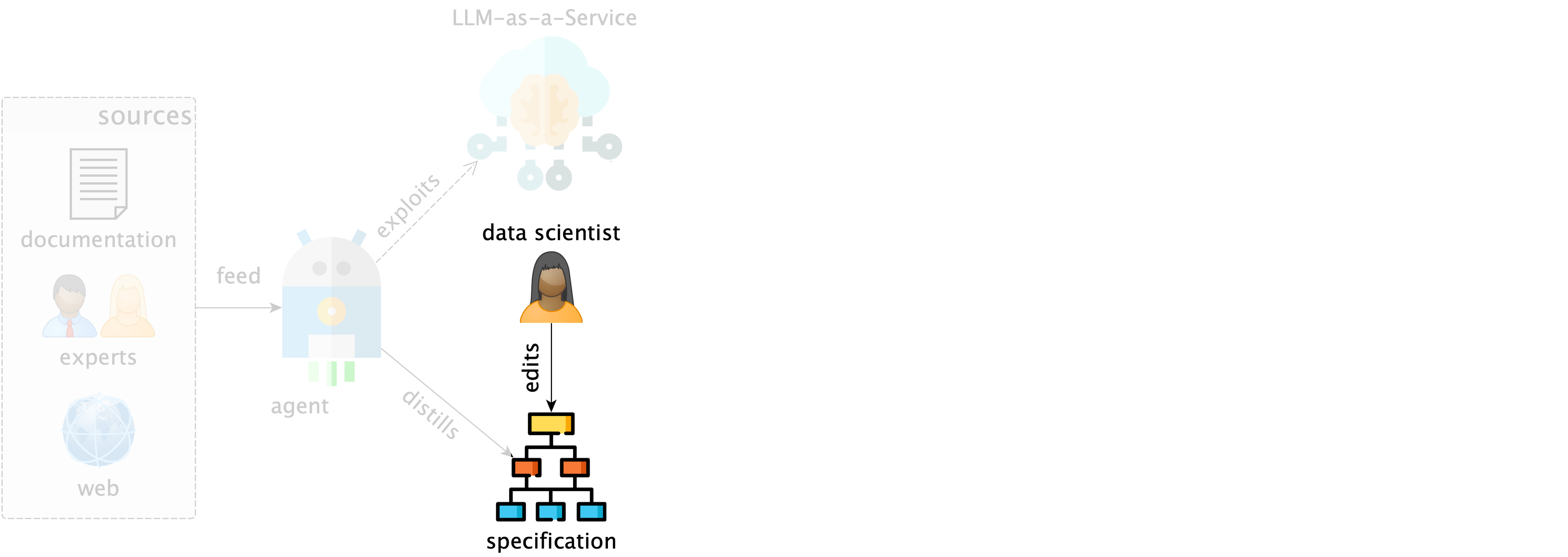
“Wait! I know that this dataset is unbalanced and this might introduce bias. Make sure the solution is robust to this.”
- E.g. prefer some algorithms over others, or require mandatory specific preprocessing steps.
AGE-ML: Agents Work Inside the Specification
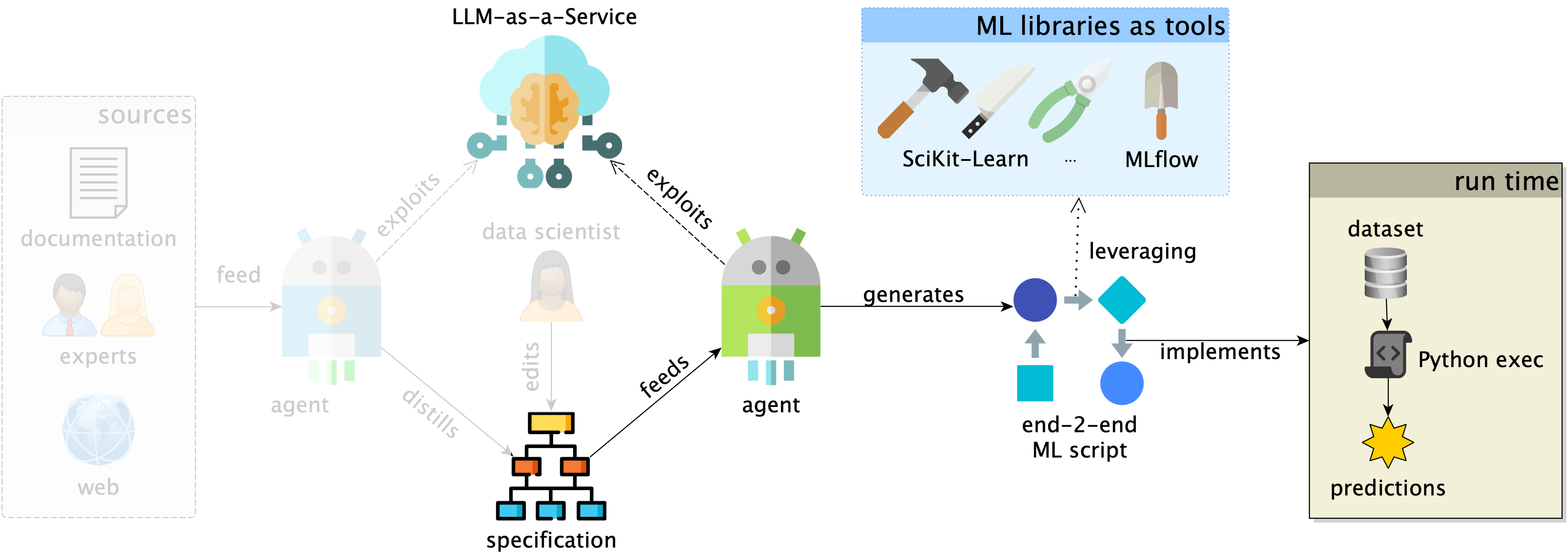
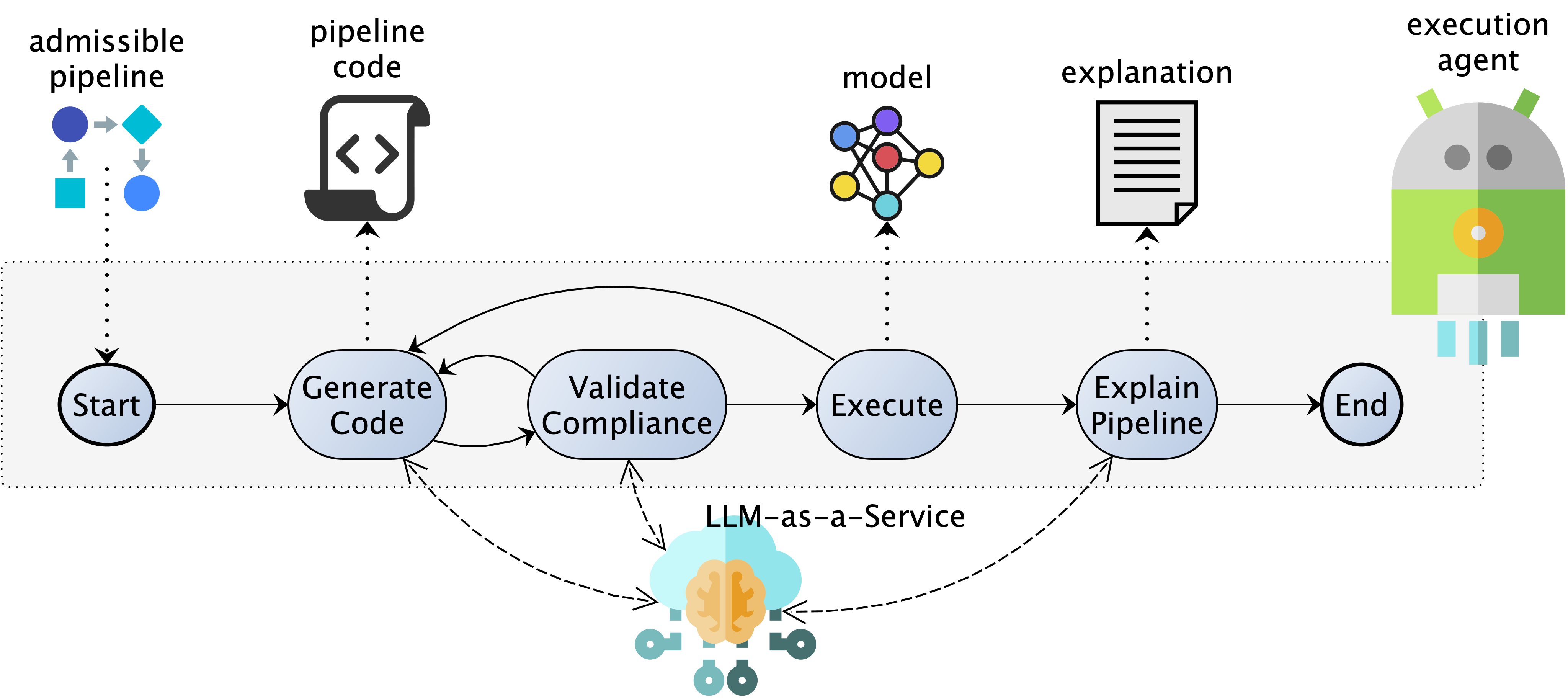
Planner, executor, and validator agents generate, validate, and run pipelines under the constraints imposed by the specification.
- Agents synthesize and adapt (Python) code inside an explicit search space and return a governed ML process.
- AGE-ML returns pipelines together with metrics, artifacts, and natural-language description for audit and reuse.
Specification In, Governed Pipelines Out
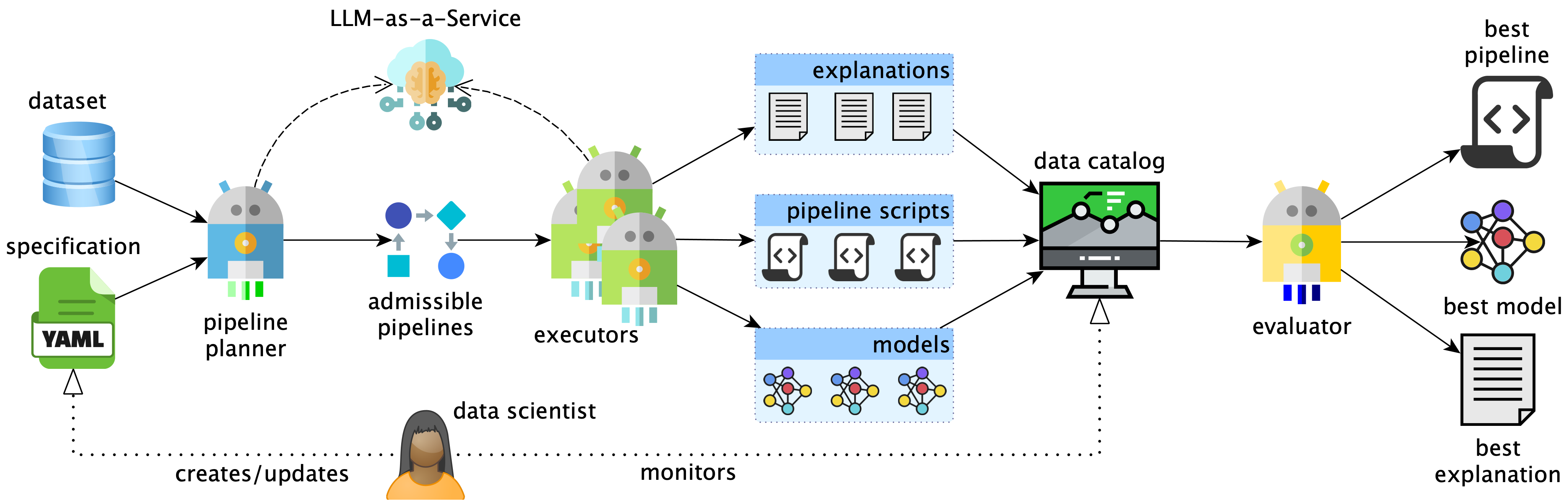
Agentic architecture
Planner
Specification to admissible pipelines (admissibility as a finite-domain constraint satisfaction problem, Z3 to compute admissible pipelines).
Executor
From pipelines to code, runs, and explanations
Catalog
Collect metrics, artifacts, traces
Evaluator
Return the best model under the budget, but all the process is logged and searchable through the catalog
Validation: Generated Code Must Prove Itself
Generated code must pass the following gates:
- Structure validation: verifies that the code is syntactically correct and follows the expected specification.
- Semantic validation: implements pipelines that do not violate the specification and conflicting constraints (e.g., feature depletion and post-hoc metrics on depleted features).
- Runtime validation: intercept runtime errors (e.g., a feature is breaking typing assumptions).
Failures become feedback for bounded repair attempts.
Data Catalog: Every Decision Becomes Audit Evidence
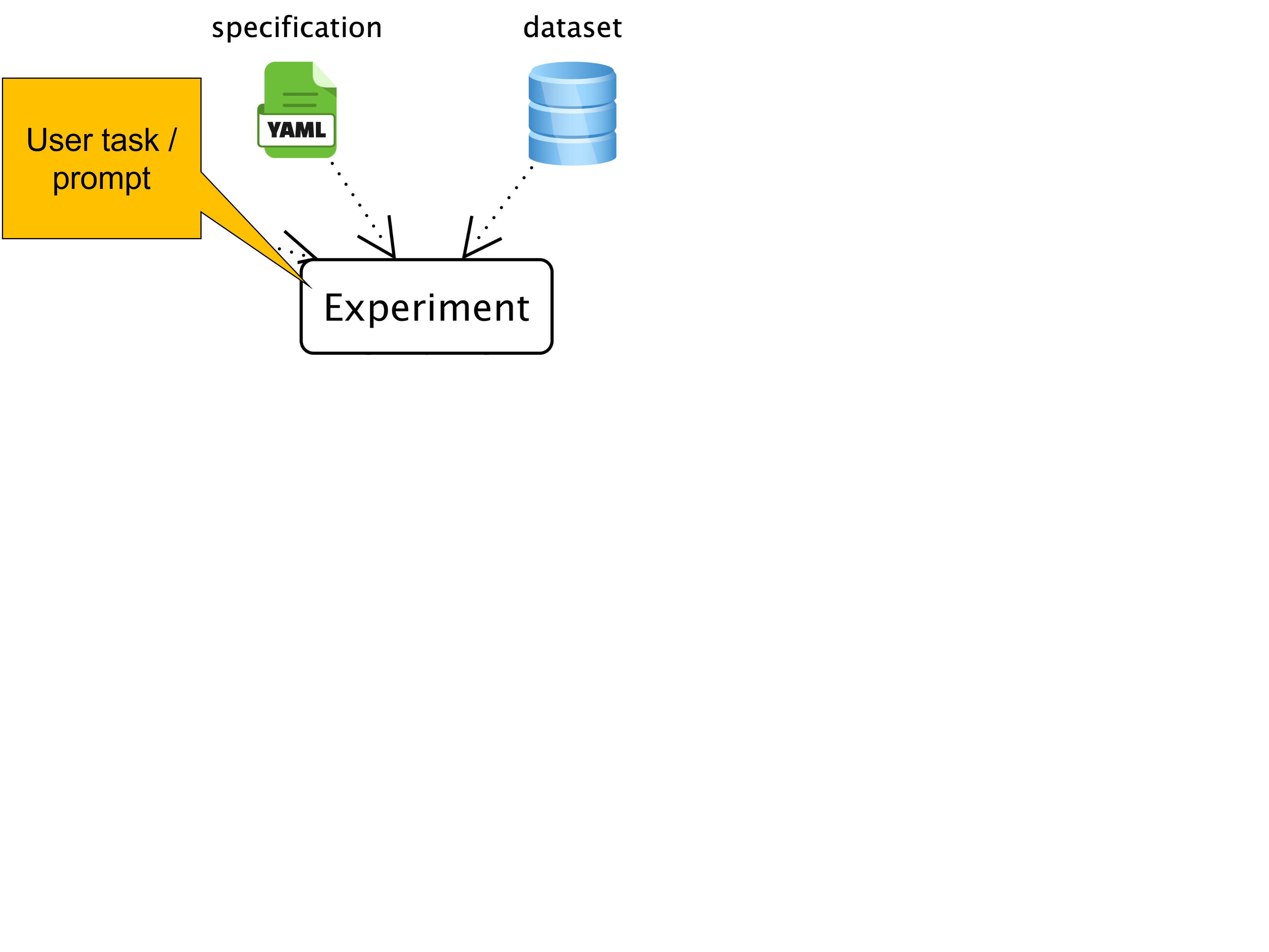
Logging hierarchy
Every Decision Becomes Audit Evidence
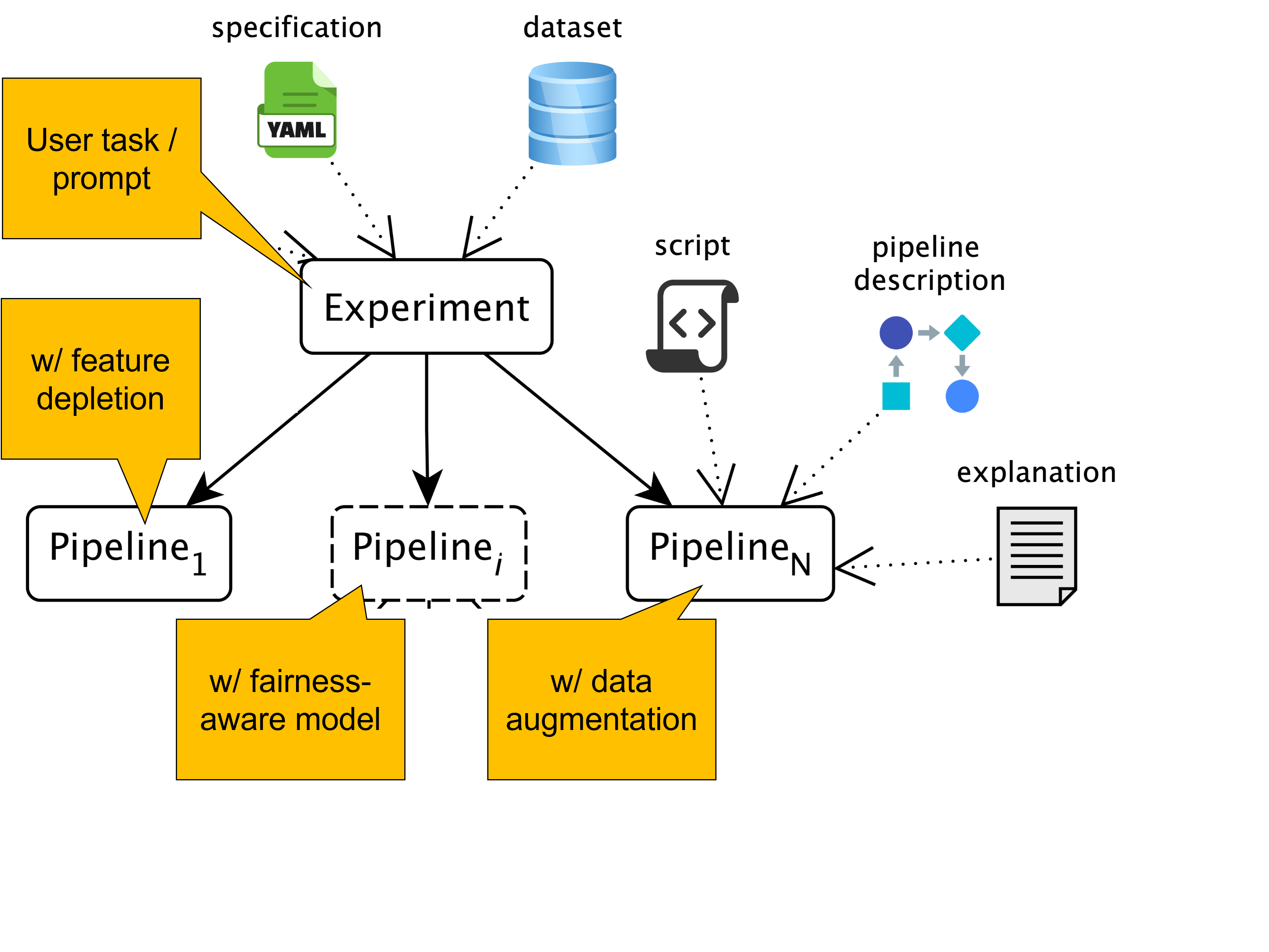
Logging hierarchy
Every Decision Becomes Audit Evidence
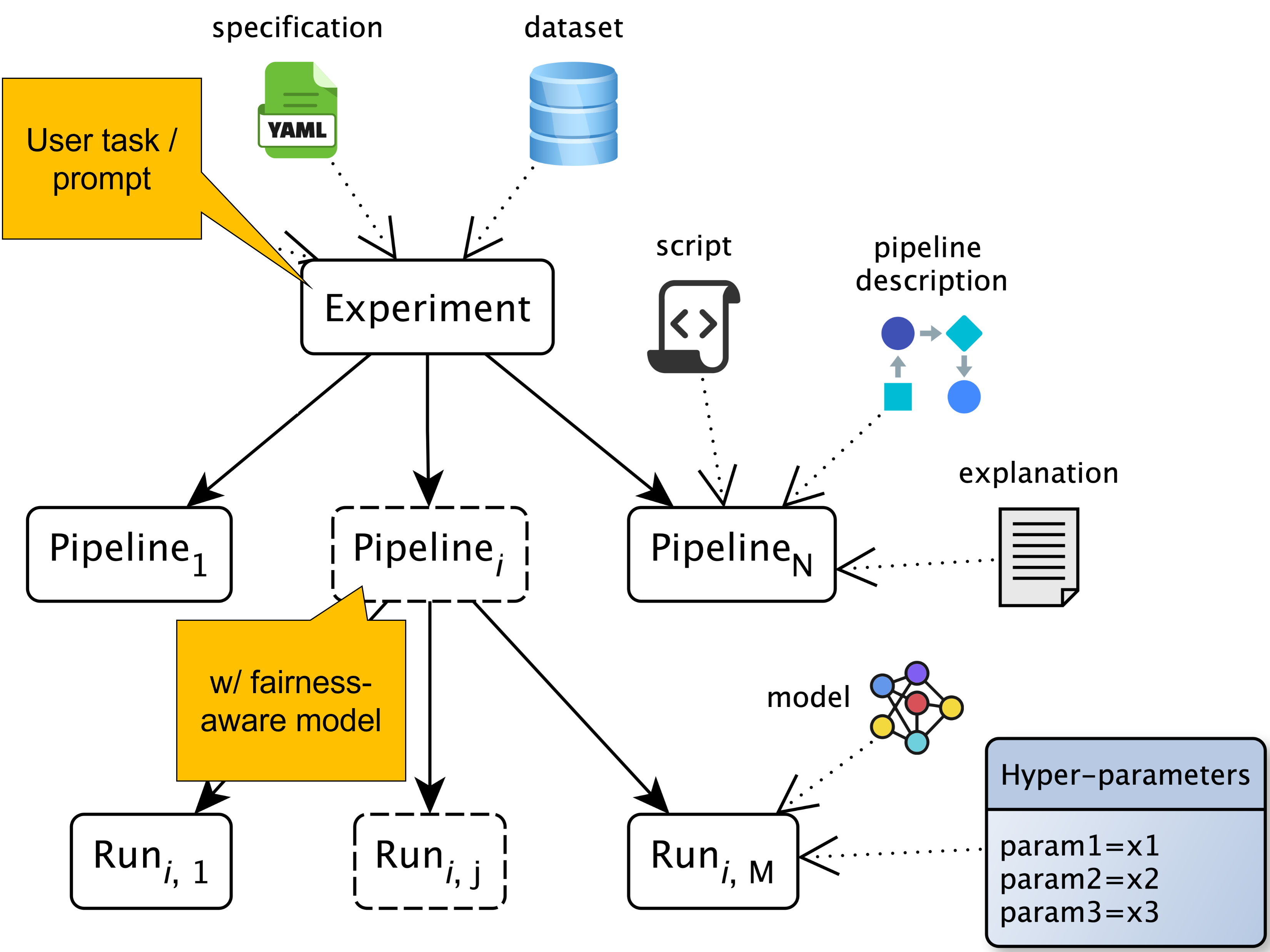
Logging hierarchy
Thank You